
Manufacturing perfume bottles is not merely a matter of blowing molten glass into a bottle shape; it is a complex process centered on four core requirements: transparency, airtightness, aesthetic quality, and batch-to-batch consistency. Because perfume bottles are typically small and demand high precision at the bottle opening—while also serving as a canvas for a brand’s visual identity—the standards for raw materials, molds, forming techniques, post-processing, and quality inspection are significantly higher than those for standard glass containers.
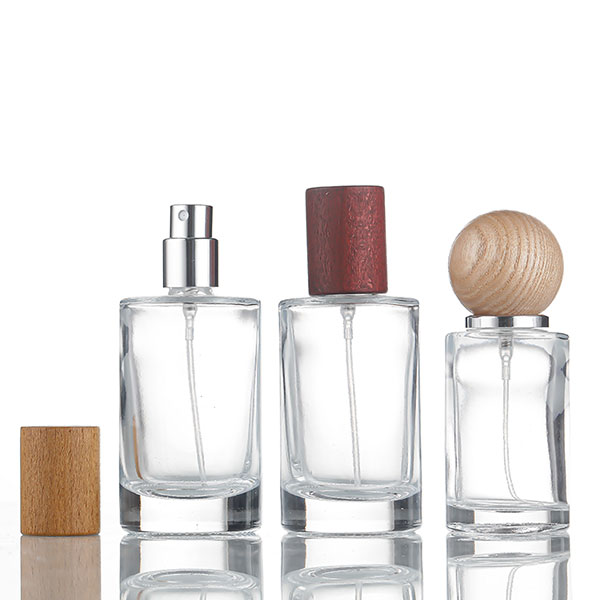
Production begins with the formulation of raw materials. Perfume bottles are often crafted from "extra-clear" (high-clarity) glass, "crystal-clear" glass, or borosilicate glass to ensure superior transparency and color stability, while minimizing the presence of air bubbles, impurities, or yellowing. The raw material mix typically includes quartz sand (the structural backbone), soda ash (to lower the melting point), limestone (to enhance stability), and cullet (recycled glass used to reduce energy consumption). High-end perfume bottles require exceptionally pure raw materials, as even the slightest impurity can compromise the appearance of the finished product.
Once mixed, the raw materials are fed into a furnace and melted at temperatures reaching approximately 1500°C. The molten glass must be thoroughly refined and possess a uniform flow to ensure consistent wall thickness during the forming process. Inadequate control during the melting stage can lead to defects such as air bubbles, "stones" (solid inclusions), streaks, or poor transparency—flaws that are particularly noticeable in perfume bottles.
After forming, the bottles must pass through an annealing lehr (a specialized kiln) for a controlled, gradual cooling process. Annealing eliminates internal thermal stress, preventing the bottles from cracking during transport, filling, or exposure to temperature fluctuations. If the annealing cycle is not properly managed, the bottles may appear flawless on the surface, yet suffer from significantly reduced impact resistance and thermal shock resistance.
Following annealing, the bottles undergo cold-end processing and secondary finishing. Common techniques include grinding the bottle neck, polishing, frosting, spray coating, screen printing, hot stamping, decal firing, electroplating, and laser marking. Precision grinding of the bottle neck is critical, as it ensures a perfect fit with the cap—an essential measure to prevent the perfume from evaporating or leaking. Meanwhile, processes such as spray coating, frosting, and hot stamping are used to achieve the specific tactile and visual qualities desired by the brand. Many manufacturers also provide complementary components—such as caps, sprayers, roller balls, and outer packaging—offering a complete "bottle + cap + pump" solution.
Quality inspection is integrated throughout the entire production process. Before leaving the factory, products typically undergo checks for surface defects, dimensional accuracy, capacity variance, thread precision, sealing integrity, chemical resistance, and impact resistance. For perfume bottles, it is also crucial to verify the fit between the bottle neck, the sprayer, and the cap, as well as the bottle’s compatibility with high-speed filling lines. Some high-end production lines even employ automated visual inspection systems to screen every single unit for air bubbles, cracks, deformations, or printing flaws.
From a procurement perspective, evaluating a perfume bottle manufacturer involves looking beyond price. Key considerations include prototyping capabilities, mold development lead times, minimum order quantities (MOQs), production yield rates, delivery reliability, and the ability to provide a fully integrated package (bottle, cap, and pump). For export orders, factors such as shatter-resistant packaging design, transit testing, and compliance documentation are equally critical.
In summary, the production of perfume bottles is a complex process involving materials, molds, thermal control, and surface decoration. A high-quality perfume bottle must not only prevent leakage, evaporation, or adverse chemical reactions with the contents, but also ensure that the brand’s design is consistently and accurately replicated across every production batch.